 Reviews



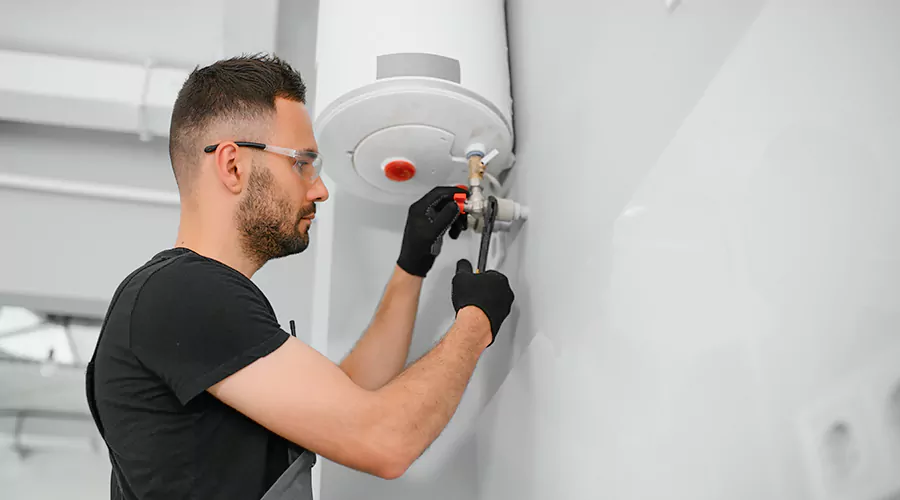
A water heater can leak because of a loose supply connection or a defective drain valve. Water escaping from its temperature-and-pressure relief system can also indicate excessive pressure or another operating problem. A confirmed leak from the storage tank itself is more serious because internal tank failure normally requires replacement. Water heater maintenance can help identify worn components, loose connections, and other issues before they develop into more serious water heater problems.
Professional water heater repair averages approximately $616 in the United States in 2026, with most reported projects costing between $228 and $1,017.
The location of the water is important. A puddle beneath the heater does not automatically prove that the tank has failed. Water can travel down the appliance from a connection near the top.
However, an active leak should be addressed promptly because the appliance contains hot water and may have electrical or gas connections.
What Are the Most Common Causes of a Leaking Water Heater?
Water heaters contain several connections and safety components that can release water when they develop a problem.
The actual source depends on the heater's design and where the first moisture appears.
Common causes include:
- Loose inlet connection: Water escapes where the cold-water supply enters the heater.
- Leaking outlet connection: Moisture develops around the hot-water outlet.
- Drain valve problem: Water drips from the valve used to empty the storage tank.
- Relief valve discharge: Water escapes through the temperature-and-pressure safety system.
- Excessive water pressure: High pressure contributes to leakage and safety-valve discharge.
- Thermal expansion: Heating water increases pressure when the plumbing system cannot accommodate expansion.
- Internal tank corrosion: Deterioration eventually allows water to escape from the storage vessel.
- Condensation: Moisture collects on certain heater surfaces or nearby piping.
A.O. Smith advises inspecting accessible connections and identifying the source before assuming that a puddle means the storage tank has failed.
What Should You Do Immediately if Your Water Heater Is Leaking?
An active water heater leak requires additional precautions because the appliance contains hot water and connects to an energy source.
The immediate goal is preventing injury and limiting water damage.
When it is safe to do so:
- Keep people away from the leak. Escaping water may be extremely hot.
- Avoid wet electrical equipment. Do not touch electrical controls or breakers from a wet area.
- Turn off the heater's energy supply. Follow the manufacturer's emergency instructions.
- Isolate the cold-water supply. Close the heater's inlet valve if it can be reached safely.
- Protect the surrounding area. Avoid contact with hot or potentially energized water.
- Observe from a safe distance. Record whether water continues escaping.
- Arrange an inspection. Do not restart the appliance until the leak has been identified and corrected.
For electric heaters, the appropriate circuit breaker should be switched off from a safe, dry location. Gas heaters have model-specific shutdown instructions.
Rheem provides separate emergency guidance for turning off electricity and isolating the water supply.
If you smell gas, leave the area and contact the appropriate emergency service or gas utility. Do not operate nearby electrical switches.
Never restart a storage heater that has been drained or may be empty.
How Can You Identify Where the Water Heater Is Leaking?
The first wet location provides an important diagnostic clue.
Water appearing at the bottom may originate from a connection higher up the heater. Therefore, inspect the accessible exterior before concluding that the tank itself has failed.
| Leak Location | Possible Cause | Initial Investigation |
|---|---|---|
| Top of heater | Inlet or outlet connection | Inspect accessible fittings |
| Side near relief valve | Relief system or valve connection | Observe discharge location |
| Relief discharge pipe | Excess pressure or valve problem | Record discharge pattern |
| Drain valve | Valve seal or connection | Inspect exterior |
| Heating-element area | Element gasket on applicable models | Keep power disconnected |
| Bottom of heater | External leak or tank failure | Trace water from above |
| Exterior piping | Condensation or loose connection | Inspect moisture source |
A.O. Smith's troubleshooting checklist identifies connections and relief-valve discharge among the possible sources of water that collects beneath a heater.
Do not remove electrical covers or internal components during an ordinary homeowner inspection.
Why Is My Water Heater Leaking From the Top?
Water appearing near the top commonly originates from the cold-water inlet or hot-water outlet connections.
These fittings connect the appliance to the property's plumbing system.
A loose or deteriorated connection can allow water to escape and travel down the outside of the heater.
Possible causes include:
- A loose supply fitting.
- A deteriorated connector.
- Corrosion near a threaded connection.
- A leaking anode-rod fitting on applicable models.
- Condensation around cold-water piping.
- Water travelling from an adjacent pipe.
A visual inspection can help identify external moisture.
Do not mistake condensation for an active pressurized leak.
A.O. Smith recommends using dry paper towels to identify moisture around accessible water connections.
If the leak is active or involves damaged piping, keep the heater isolated.
Why Is Water Collecting Beneath the Heater?
Water collecting beneath a heater can have several origins.
A drain valve may drip directly toward the floor. Water from an upper connection can travel down the tank's exterior.
Some newly installed gas storage heaters can also produce condensation during initial operation.
A.O. Smith explains that condensation may occur when a newly installed tank contains cold water. It can also appear during certain operating conditions.
However, recurring standing water should not be dismissed as ordinary condensation.
A confirmed internal storage-tank leak is a different condition. Corrosion or structural failure of the tank generally requires complete replacement.
Do not attempt to seal a damaged storage tank with household adhesives.
Why Is My Water Heater Relief Valve Leaking?
The temperature-and-pressure relief valve is a safety component designed to release water when operating conditions reach its activation limits.
A valve that discharges water may be responding to excessive temperature or pressure.
Thermal expansion is another possible cause.
When water heats inside a closed plumbing system, its volume increases. If the system cannot accommodate that expansion, pressure can rise enough to activate the relief valve.
Bradford White identifies thermal expansion and excessive pressure as recognized causes of repeated relief-valve discharge.
A defective valve is also possible, but replacing the valve without identifying the underlying cause may not resolve the problem.
Never cap or block the relief valve or its discharge pipe.
The discharge system protects the water heater against dangerous operating conditions.
What Is Thermal Expansion and Why Does It Matter?
Water expands as its temperature increases.
In some plumbing systems, a check valve or backflow-prevention device prevents this expanded water from moving backward into the main supply.
Pressure may then rise inside the water-heating system.
A correctly sized thermal expansion tank can accommodate the increased water volume in installations that require one.
However, the appropriate solution depends on the plumbing configuration and local requirements.
Bradford White explains that expansion tanks can help manage thermal expansion in closed water-supply systems.
Repeated relief-valve discharge should be investigated rather than treated as an ordinary dripping connection.
Can a Water Heater Drain Valve Cause a Leak?
Storage water heaters normally have a drain valve near the lower section of the appliance.
The valve allows water to be removed during appropriate maintenance.
A damaged valve or connection can allow water to drip continuously.
Possible symptoms include:
- Water collecting directly beneath the valve.
- Moisture around the valve connection.
- A slow drip that continues between heating cycles.
- Mineral deposits near the outlet.
- Water escaping from the valve after maintenance.
A damaged drain valve may require replacement.
Because the work can involve draining the tank and handling hot water, the repair must follow the manufacturer's safety instructions.
Do not remove a drain valve while the storage tank is pressurized.
What Warning Signs Indicate a Serious Water Heater Leak?
Some leaks are limited to an accessible fitting. Other symptoms suggest conditions that could affect the appliance's operation or surrounding property.
Watch for these warning signs:
- Water continuously collects beneath the heater.
- Moisture appears around the electrical access panels.
- The relief valve repeatedly discharges.
- Water flows continuously from the relief discharge pipe.
- Corrosion appears around tank seams.
- Water leaks from multiple external locations.
- Hot-water availability declines unexpectedly.
- The surrounding floor remains wet.
- Rust-colored water appears alongside other tank-failure symptoms.
- Water escapes rapidly from the heater.
Continuous discharge or water near electrical components deserves particular caution.
A sudden major leak should be treated as an urgent plumbing problem.
How Can You Perform a Safe Visual Leak Inspection?
A homeowner inspection should remain limited to accessible exterior areas.
The purpose is to document the visible source without removing safety components or dismantling the appliance.
Follow these steps:
- Keep the heater switched off and the water isolated when an active leak has been identified.
- Wait until the area is safe to approach.
- Inspect the accessible cold-water inlet.
- Check the hot-water outlet connection.
- Observe the relief valve and discharge pipe without touching them.
- Look for moisture near the drain valve.
- Inspect the visible exterior for water trails.
- Record where the first moisture appears.
- Check whether nearby plumbing could be responsible.
- Document the findings for the repair professional.
Do not remove insulation surrounding hot components or open electrical access panels.
Do not manually operate the relief valve as an improvised leak test. Hot discharge water can cause severe burns.
How Much Does Water Heater Leak Repair Cost in 2026?
Repair costs depend on whether the leak involves a replaceable external component or damage to the storage tank itself.
The following figures reflect published U.S. estimates for 2026.
| Repair or Replacement | 2026 Cost Reference |
|---|---|
| Minor repair | Can start around $90 |
| General professional water heater repair | 228–1,017 |
| Average professional repair | Approximately $616 |
| Relief valve replacement | Up to approximately $200 |
| Tank-style water heater replacement | 882–1,825 |
| Tankless water heater replacement | 1,400–3,900 |
The repair figures come from Angi's August 2026 report. The replacement figures reflect its July 2026 national pricing guide.
A confirmed internal tank leak generally makes replacement necessary because the storage vessel itself has failed.
When Should You Call a Professional?
Professional inspection is appropriate for an active water heater leak because the appliance contains hot water and may have electrical or gas connections.
The following conditions deserve particular attention:
- Water escapes continuously from the relief discharge pipe.
- A confirmed internal tank leak is suspected.
- Moisture appears around electrical components.
- Gas piping or gas controls may be affected.
- The drain valve cannot be safely isolated.
- Water continues leaking after the cold-water supply is closed.
- The surrounding area is experiencing water damage.
- The source cannot be identified through a safe exterior inspection.
A qualified technician can identify the failed component and determine whether repair or replacement is necessary.
Do not resume operation until the appliance has been confirmed safe.
How Can You Prevent Water Heater Leaks?
Regular maintenance can help identify developing problems before they cause significant damage.
The correct maintenance schedule depends on the heater's manufacturer and model.
Useful preventive measures include:
- Inspect accessible water connections periodically.
- Check for moisture around the drain valve.
- Follow the manufacturer's maintenance schedule.
- Monitor repeated relief-valve discharge.
- Investigate excessive household water pressure.
- Have thermal expansion problems evaluated when suspected.
- Address early corrosion or visible moisture.
- Keep the area around the heater accessible for inspection.
Never modify the safety relief system.
A correctly maintained heater still requires replacement if its storage tank develops a structural leak.
Conclusion
If your water heater is leaking, identify the visible source without dismantling the appliance. Loose supply connections and defective drain valves can cause external leaks. Relief-valve discharge requires investigation because it may indicate excessive pressure or another operating problem.
A confirmed internal tank leak generally requires replacement. Shut down and isolate an actively leaking heater when it is safe to do so. Professional inspection can identify the cause and prevent unsafe operation.
Frequently Asked Questions
Does water beneath my heater mean the tank has failed?
Not necessarily. Water can travel from an upper connection or drain valve. Condensation can also produce moisture under some conditions.
Can a leaking water heater be repaired?
Some external components can be repaired or replaced. A confirmed structural leak from the storage tank generally requires replacement.
Why is my water heater relief valve dripping?
Excessive pressure or thermal expansion may be responsible. A defective valve is another possibility.
Should I turn off a leaking water heater?
An actively leaking heater should be isolated and shut down according to the manufacturer's emergency instructions when it is safe to do so.
Can I block the relief discharge pipe to stop the leak?
No. The relief system is a safety component and must never be capped or obstructed.